

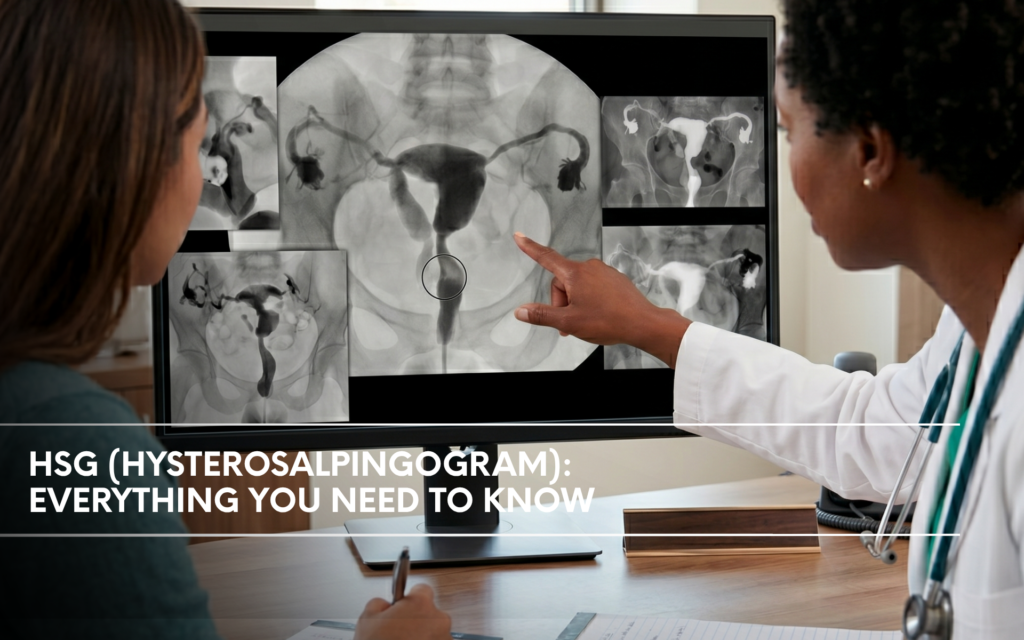
HSG (Hysterosalpingogram): Everything You Need to Know
A clear, patient-friendly guide by Dr. Kunaal Jain & Dr. Riya Kothari Jain
Sirona Shanti Diagnostics
What Is an HSG Test?
A Hysterosalpingogram (HSG) is a special type of X-ray procedure used to examine the inside of the uterus (womb) and fallopian tubes. The name breaks down meaningfully: hystero means uterus, salpingo means fallopian tubes, and gram means image.
During the test, a safe, water-based dye (contrast medium) is gently passed through the cervix into the uterus and fallopian tubes. Because this dye shows up clearly on X-ray images, the radiologist can see the shape of the uterine cavity and check whether the fallopian tubes are open (patent) or blocked.
In simple terms, think of HSG as a “roadmap” test for the female reproductive tract. It helps doctors visualise pathways that are otherwise invisible from the outside, so they can understand exactly what might be preventing pregnancy or causing other gynaecological concerns.
Why Is an HSG Done?
The primary reason an HSG is recommended is to investigate the cause of infertility or recurrent pregnancy loss. The test provides two crucial pieces of information:
- Fallopian Tube Patency: Whether the fallopian tubes are open and free of blockages. Blocked tubes are one of the most common, yet treatable, causes of infertility in women.
- Uterine Cavity Evaluation: The shape and inner lining of the uterus, help detect abnormalities such as fibroids, polyps, adhesions (scar tissue), or congenital malformations like a septate uterus.
Beyond diagnosis, HSG can sometimes be mildly therapeutic. The gentle pressure of the dye flowing through the tubes may flush out minor blockages, and research suggests slightly improved conception rates in the months following the procedure.
Who Needs an HSG?
Your gynaecologist or fertility specialist may recommend an HSG if you have:
| Condition / Situation | How HSG Helps |
| Difficulty conceiving for 6–12 months | Checks for tubal blockage or uterine abnormalities |
| Two or more miscarriages | Identifies uterine structural issues that may cause pregnancy loss |
| Suspected pelvic inflammatory disease | Reveals tubal damage caused by past infections |
| Endometriosis follow-up | Assesses impact on fallopian tubes |
| Before IVF or IUI treatment | Confirms uterine cavity is normal and suitable for embryo transfer |
| After tubal ligation reversal | Checks whether tubes are now open after surgery |
| After removal of fibroids or polyps | Confirms cavity is clear post-procedure |
How to Prepare for the Test
Timing of the Test
HSG is ideally performed between Day 7 and Day 10 of your menstrual cycle (Day 1 = first day of your period). This ensures your period has ended (so the view is clear) and you have not yet ovulated (reducing the unlikely risk of radiation exposure to a fertilised egg).
Before You Come In
- Inform your doctor if you are allergic to contrast dye, iodine, or any medications.
- Your doctor may prescribe a short course of antibiotics before the procedure: take them as directed.
- Take a mild painkiller (such as ibuprofen 400 mg) about an hour before the test, as advised, to reduce cramping.
- You do not need to fast or be admitted to the hospital, this is an outpatient procedure.
- Bring a sanitary pad, as there may be light spotting afterwards.
- Consider arranging for someone to drive you home, as you may feel mildly uncomfortable after the test.
Important: Tell Your Doctor If You Have: An active pelvic or vaginal infection, an untreated sexually transmitted infection, unexplained vaginal bleeding, or a possibility of pregnancy. In these cases, the HSG may need to be postponed for your safety.
Step-by-Step: The HSG Procedure
The entire procedure takes approximately 15 to 30 minutes. Here is exactly what happens:
Step 1: Position on the X-ray table: You will lie on your back on a padded X-ray table, with your knees bent, similar to a gynaecological examination position.
Step 2: Speculum insertion: A speculum (the same instrument used during a routine pelvic exam) is placed to allow the radiologist to view the cervix.
Step 3: Cervix is cleaned: The cervix is gently cleaned with an antiseptic solution to reduce the risk of infection.
Step 4: Catheter placement: A small, flexible tube (catheter) is carefully inserted through the cervix into the uterine cavity. This may cause a brief, mild cramp.
Step 5: Contrast dye is introduced: A small amount of water-based, iodine-based contrast dye is slowly injected through the catheter, making the anatomy visible on X-ray.
Step 6: X-ray images are captured: The radiologist takes a series of real-time X-ray images (fluoroscopy) as the dye flows through the reproductive organs.
Step 7: Catheter is removed: Once all necessary images are captured, the catheter and speculum are removed. You can rest briefly before going home.
What to Expect During the Test
- Mild to moderate cramping when the dye is injected, most women describe it as similar to a period cramp, usually lasting only during the injection.
- A sensation of pressure or fullness in the lower abdomen as the dye fills the uterus.
- Slight dizziness or nausea in rare cases, inform the radiologist immediately if you feel unwell.
- Light spotting for a day or two after the procedure is completely normal.
Reassurance: Most women find the procedure far less uncomfortable than they anticipated. The radiologist and support staff at Sirona Shanti Diagnostics will explain each step as it happens, and you are always free to ask questions or request a brief pause if needed.
Understanding Your HSG Results
Normal HSG Report
A normal report means the uterine cavity is well-shaped with no abnormalities, and both fallopian tubes are open, the dye flows freely and spills into the pelvic cavity at the ends of the tubes. This is a reassuring result.
Abnormal Findings & What They Could Mean
| Finding on HSG | Possible Meaning |
| Blocked fallopian tube (no dye spillage) | Tubal occlusion due to infection, endometriosis, or adhesions |
| Dye spills from only one tube | One tube is open; the other may be blocked |
| Irregular uterine outline | Possible fibroids, polyps, or adhesions inside the uterus |
| Divided or heart-shaped uterine cavity | Congenital uterine anomaly (e.g. bicornuate or septate uterus) |
| Dilated fallopian tubes (hydrosalpinx) | Fluid-filled tubes, often from past pelvic infection |
Important Note: An abnormal HSG finding does not automatically mean a serious problem. Some findings, such as tubal spasm (where a tube temporarily closes during the procedure), can mimic a blockage. Your gynaecologist will correlate the HSG report with your full clinical picture before recommending the next steps. Always discuss your results with your doctor.
After the Procedure: Care & Recovery
Recovery from an HSG is quick. Most women return to normal daily activities the same day.
- Use a sanitary pad for any light spotting; do not use a tampon for the next 48 hours.
- Mild cramping or low back pain for a few hours afterwards is normal. A warm compress or mild painkiller can help.
- You may notice a small amount of dye leakage; this is completely harmless.
- Avoid sexual intercourse, swimming pools, and baths for 24–48 hours to reduce infection risk.
- Stay well-hydrated and rest if you feel fatigued.
Call Your Doctor If You Notice
- Heavy vaginal bleeding (more than a normal period)
- Fever above 38°C (100.4°F)
- Severe or worsening pelvic pain
- Foul-smelling vaginal discharge
Risks & Safety
HSG is a well-established, widely used procedure considered safe for most women. As with any medical procedure, it is important to be aware of the small risks involved:
| Risk | How Common | What Is Done |
| Pelvic infection | Less than 1–2% | Preventive antibiotics are prescribed |
| Allergic reaction to dye | Rare | Allergy screening done before the test |
| Radiation exposure | Very low dose (like a chest X-ray) | Procedure timed to avoid ovulation |
| Uterine perforation | Extremely rare | Performed by trained radiologists |
| Vasovagal reaction | Rare | You are monitored throughout; rest is provided |
Safety at Sirona Shanti Diagnostics: All HSG procedures at our centre are performed by qualified, experienced radiologists using modern fluoroscopy equipment. We follow stringent safety protocols to minimise radiation dose and the risk of infection, ensuring your comfort and well-being throughout.
Frequently Asked Questions
Q: Is the HSG test painful?
A: Most women experience mild to moderate cramping during the test, similar to period pain, particularly when the dye is injected. The discomfort is usually brief. Taking a mild painkiller an hour before the procedure, as advised by your doctor, can make it significantly more comfortable.
Q: How long does the HSG procedure take?
A: The actual procedure takes approximately 15–30 minutes. Plan for about an hour for your visit in total.
Q: When in my cycle should I schedule the HSG?
A: The ideal time is between Day 7 and Day 10 of your menstrual cycle after your period has ended, but before ovulation. Your gynaecologist will guide you on the exact date when giving the referral.
Q: Do I need anaesthesia for an HSG?
A: No. HSG does not require general anaesthesia. It is performed without sedation. A mild oral painkiller taken beforehand is usually sufficient to manage any discomfort.
Q: Can the HSG improve my chances of getting pregnant?
A: In some cases, yes. The contrast dye flowing through the tubes can flush out minor mucus plugs or debris. Several studies have noted a modest increase in pregnancy rates in the three to six months following an HSG.
Q: Can I go back to work the same day?
A: Most women can. Many return to light activities and work the same day. If you experience significant cramping or feel tired, resting for the rest of the day is perfectly fine.
Q: Will the HSG affect my menstrual cycle?
A: The HSG test does not typically affect your menstrual cycle. Some women may notice their next period is slightly heavier or arrives a day or two differently, but this is usually transient.
Q: Where can I get an HSG test done in Mumbai?
A: Sirona Shanti Diagnostics in Mumbai offers HSG procedures performed by experienced radiologists in a patient-friendly environment. Contact us directly for appointments.
Medical Disclaimer: This article is intended for general informational and educational purposes only. It is not a substitute for professional medical advice, diagnosis, or treatment. Always consult your qualified gynaecologist or healthcare provider regarding any medical condition or before undergoing any diagnostic procedure. Reviewed by the Radiology Team, Sirona Shanti Diagnostics, Mumbai.
───────
Go to Our Website and Get in Touch
Don’t ignore what your body is trying to tell you. A simple thyroid test can help you feel like yourself again, whether you’ve gained or lost weight for no reason or are always tired. To find out more about our full range of health services and packages.
Go to our website at https://sironashanti.com
OR
Call +91 98191 88333 or WhatsApp +91 86554 08047.
───────
Blog Keywords:
HSG test in Mumbai, Hysterosalpingogram (HSG), uterus and fallopian tubes, X-ray of the uterus, blocked fallopian tubes, HSG test procedure, Sirona Shanti Diagnostics, when to do an HSG test, HSG test pain; fertility diagnostic tests, tubal patency test, radiology center for HSG HSG test side effects,IVF treatment, Sirona Shanti Diagnostics, HSG test results, HSG scan in Mumbai.
Common Keywords:
Best NABL accredited pathology lab in Mumbai, Best pathology lab in Mahim Dadar Prabhadevi Worli, Best radiology centre center in mumbai, Best sonography center in mumbai, Best Radiologist / Sonologist in Mahim Worli Dadar Prabhadevi, Best Cardiologist in Mumbai, best cardiology centre, centre in Mahim Dadar Prabhadevi, ecg at home, xray at home, blood collection at home, blood collection in mumbai, bloold collection south mumbai, verified best diagnostics centers, sironashanti diagnostics center
Common Extra Keywords:
diagnostic centre Mumbai, best diagnostic centre Mumbai, pathology lab Mumbai, best pathology lab Mumbai, NABL accredited lab Mumbai, diagnostic centre near me Mumbai, trusted diagnostic centre Mumbai, Sirona Shanti Diagnostics, affordable diagnostic centre Mumbai, diagnostic centre open Sunday Mumbai, diagnostic centre Prabhadevi, pathology lab Prabhadevi, blood test Prabhadevi Mumbai, diagnostic centre Mahim, pathology lab Mahim, blood test Mahim Mumbai, diagnostic centre Dadar, pathology lab Dadar West, blood test Dadar Mumbai, diagnostic centre Bandra, pathology lab Bandra West, blood test Bandra Mumbai, diagnostic centre Lower Parel, health checkup Lower Parel Mumbai, diagnostic centre Worli, blood test Worli Mumbai, home blood collection Mumbai, home blood test Colaba, home sample collection South Mumbai, home blood collection Andheri, home blood test Juhu, home blood collection Santacruz, home blood test Vile Parle, home blood collection Khar Mumbai, at home blood test Mumbai, blood sample collection at home Mumbai, full body checkup Mumbai, full body health package Mumbai, full body blood test Mumbai, complete blood count Mumbai, CBC test Mumbai, thyroid test Mumbai, thyroid profile Mumbai, TSH test Mumbai, diabetes test Mumbai, HbA1c test Mumbai, blood sugar test Mumbai, lipid profile test Mumbai, cholesterol test Mumbai, liver function test Mumbai, kidney function test Mumbai, urine test Mumbai, Vitamin D test Mumbai, Vitamin B12 test Mumbai, dengue test Mumbai, malaria test Mumbai, typhoid test Mumbai, ECG test Mumbai, ECG near me Mumbai, 2D echo test Mumbai, echocardiogram Mumbai, stress test Mumbai, TMT test Mumbai, heart checkup Mumbai, cardiac test Mumbai, digital X-ray Mumbai, X-ray centre Mumbai, X-ray near me Mumbai, sonography Mumbai, ultrasound test Mumbai, USG scan Mumbai, mammography Mumbai, breast screening Mumbai, home ECG Mumbai, home X-ray Mumbai, blood test near me Mumbai, lab test near me Mumbai, pathology lab near me, diagnostic centre near me, full body checkup near me Mumbai, health checkup near me Mumbai, best lab near me Mumbai, blood collection near me Mumbai, ECG near me, sonography near me Mumbai, health checkup packages Mumbai, annual health checkup Mumbai, preventive health checkup Mumbai, women health checkup Mumbai, senior citizen health checkup Mumbai, PCOD test Mumbai, hormonal test Mumbai, fertility test Mumbai, thyroid specialist Mumbai, endocrinology clinic Mumbai, gynaecology consultation Mumbai, cardiology consultation Mumbai, how much does full body checkup cost in Mumbai, best full body checkup package Mumbai affordable, same day blood test report Mumbai, online report delivery diagnostic Mumbai, blood test report on WhatsApp Mumbai, NABL lab near me Mumbai, ISO certified pathology lab Mumbai, accurate blood test Mumbai, trusted blood test results Mumbai, walk-in diagnostic centre Mumbai.